Cassette Assets

This is a blog post about cassettes, with no mention of the Sony Walkman, except here. The Compact Cassette was developed by a Belgian team of engineers at Philips, and introduced under the Norelco brand in 1963. Two years later, to promote the new format, Philips gave portable cassette decks to EMI for the Beatles to try.
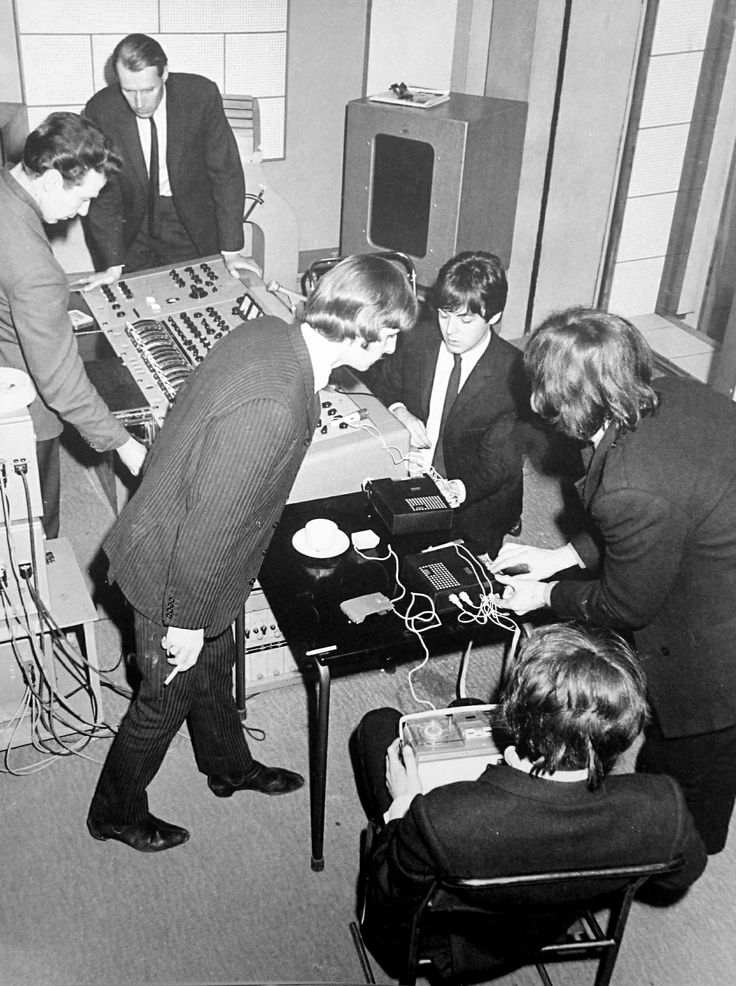
Upstairs at EMI Studio 2, 1965. Engineer Norman “Hurricane” Smith is on the left.

Christmas, 1969, I received a Panasonic RQ-204S cassette deck. It was rugged, with very good sound that could be played loud without breaking up, even at full volume.
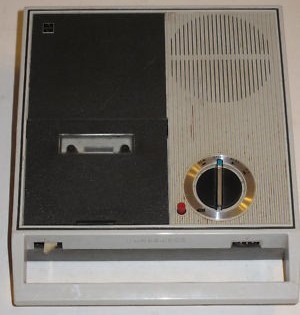
I used the Panasonic deck to record WBCN radio and some records, but especially to exchange voice letters with my friend Greg, back in Connecticut. Long distance phone calls were out of the question, but a cassette could be mailed with a couple of stamps.
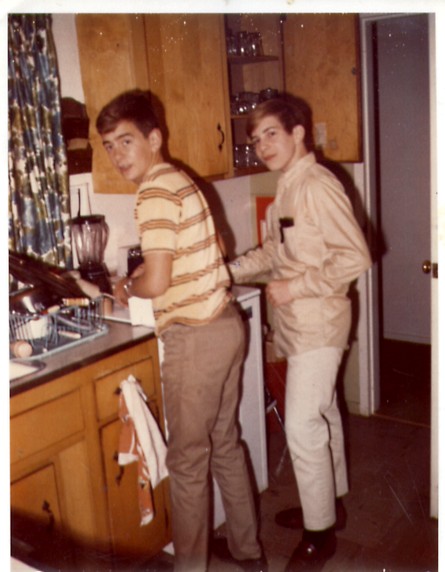
Norwalk, Connecticut, January, 1969

I first learned about cassettes as a computer software medium upon meeting one of my college roommates, named Brad. Before starting at Westfield State, Brad spent a year aboard the Atlantis II research ship, out of Woods Hole, Massachusetts.

The Atlantis II is best known for hosting the Alvin deep-ocean submarine, and for being used to locate the Titanic. The year when my friend Brad was aboard, scientists were conducting the early research into Continental Drift. I recall the project ended up being featured in National Geographic.

Brad was a math whiz just out of high school, working as a Fortran programmer on the Atlantis II. Cassettes were used to load programs and for data storage. When we met, Brad had a large collection of cassettes from the ship that he had mostly repurposed from data to music, with his very expensive, high-end portable Sony deck. Ten years later, working with Brad at a software company, the sound of the 300 baud modems we used was indistinguishable from what I heard playing data cassettes.

Which brings me to what this blog post is really about — Radiolab’s Mixtape series, and their Cassetternet segment from a month ago. The first part is about cassettes used for software. The second part returns to cassettes as a means of human communication; specifically, their influence in bringing about the Islamic Revolution in Iran.

1978’s Model

There’s no need to hold hot coals to my bare feet and force me to confess the album that I have played more than anything in my entire life. I freely admit that, by a wide margin, it’s the American edition of Elvis Costello’s This Year’s Model, with “Costello” on the label instead of “Columbia.”

I was working long hours at a radio station with a soft Adult Contemporary format. The U.S. Costello album concludes with the superb “Radio, Radio,” that isn’t on the UK edition. This is the stateside album cover.

Blog @ 33⅓

Today is this blog’s 15th anniversary. This month is also the 50th anniversary of starting my high school job. 50/15=3.33 — a third of what I consider my adult life or, by shifting the decimal point, the speed of a rotating LP, which seems fitting. My job was in this building, which was originally a W.T. Grants store.

For $1.60/hour, I washed dishes at the Bradford House restaurant, at the far end of the store, where the white posts are. I worked very, very hard, and how well I remember the logo and pattern that’s on these cups and saucers.

My junior year of high school I worked up to 25 hours/week washing dishes. Note the restaurant’s hours on this old ad.

Finishing a 5-10 PM shift on Fridays, there were many Saturdays I returned to work at 8 AM and worked fourteen hours. I’m sure it wasn’t legal for a 16-year-old kid to work a 14-hour day, but I was desperate for the money.

At end of my junior year, a kid who worked part-time as a cook graduated. He left for Canada, where he could be certain of avoiding the draft by attending McGill University. I was given his job, along with a raise to… wait for it… $1.85/hour. The 14-hour Saturdays ended, and from the start of that summer, through the start of the following summer, I filled the plates at the restaurant, rather than wash them.

Being a short-order cook was challenging, but it was a lot of fun, and I held similar jobs in college. After high school graduation, I quit the Bradford House when I heard about a summer job working for the town’s school system for $3/hour. The exact same pay I would earn four years later at the radio station.

A Face Too Good For Radio

This video was recommended to me by YouTube from one of my subscriptions.

I gasped, even before playing it. The woman on the record jacket cover could be a twin for the woman I worked with when I was a voice on the radio, many years ago. I was the news guy during her afternoon shift. We used to indulge the sort of on-air playful banter that became more common later in the business.

Why would such a stunningly beautiful woman choose to work in radio, rather than being seen on TV? Because she was married, and being as smart and strong-willed as she was beautiful, she didn’t want to be objectified by men, to use a current expression.