That’s a preview of a very interesting bit of Japanese animation history. The complete video can’t be embedded. Here’s a link.
Category: Animé
The U-Files
The 90’s! The decade of The X-Files and the infamous alien autopsy.
Lovely Rena, a member of the monster-fighting GUTS team, encounters a grey alien in an episode of Ultraman Tiga.
Like the 2005 return of Doctor Who after fifteen years, Ultraman returned to TV in 1996 after a 15-year absence. As with Who, each new Ultraman occupies a different body.
With a partial exception during Ultraman Ace, women had played secondary roles. They mostly handled communications at the command center, like Lieutenant Uhura.
Rena in Ultraman Tiga was a featured character. Her presence was obviously intended to attract teenage boys to the series.
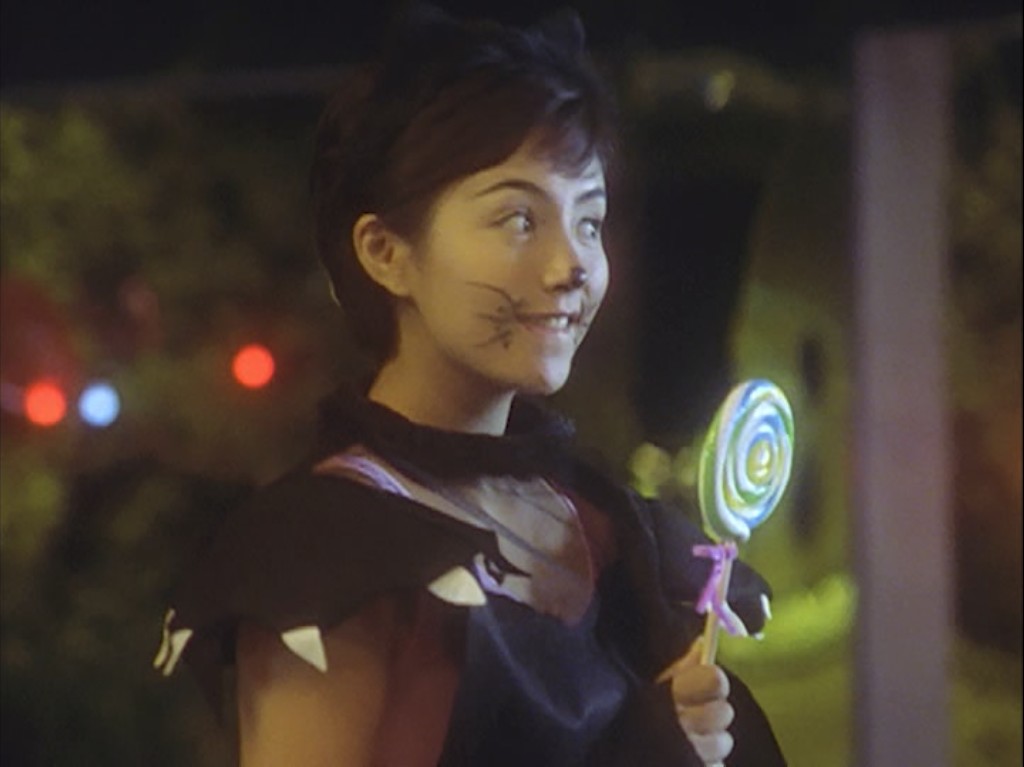
This next scene leaves no doubt the studio knew the effect that Rena would have on their target demographic.
Rena was played by Takami Yoshimoto, who is now 51. Takami was literally born into the Ultra family, as her father, Susumu Kurobe, was the first Ultraman in the original 1966 series.
Takami’s popularity quickly extended beyond Ultraman. The LaserDisc store I frequented throughout the 90’s had Japanese “girl watching” videos for rent, similar to this one with Takami.
Click here to see the safest “boudoir” photo of Takami I can share. It is nonetheless NSFW unless you’re working from home.


Stunning, Jaw-Dropping, Mind-Blowing
Of the many anime series I have seen, going all the way back to Astro Boy in 1963, this superlative production is a standout. Note: I am watching it on Blu-ray, not Netflix.
Anime Pick – Future Boy Conan
Hayao Miyazaki’s first directorial work, the outstanding Future Boy Conan from 1978, is finally available in the U.S. Conan is no barbarian, but he’s one tough kid. We’re not quite all the way through the series, but I can’t imagine the conclusion being a disappointment.
Reinventing the Reel
The Fleischer Brothers, the Disney Brothers, and now there are Moldenhauer Brothers.
The design of the Cuphead character, as well as the action in the game, reminds me of this obscure Japanese cartoon from the 1930’s.
Sherlock’s Woke America
On my Kindle e-reader I’m progressing through a complete collection of Sherlock Holmes stories. I also have a book that reproduces all of the stories as they originally appeared in The Strand magazine, with illustrations by Sidney Paget. The first two novels, “A Study in Scarlet” and “The Sign of Four,” were published elsewhere.
Years ago, when I first read “A Study in Scarlet,” I was quite surprised that much of it is not only a Western that takes place in America, it’s a scathing portrayal of the violence associated with the early Mormons. Doyle’s interest in the United States appears again in the story I’m currently reading.
From “The Five Orange Pips,” by Arthur Conan Doyle, published November, 1891:
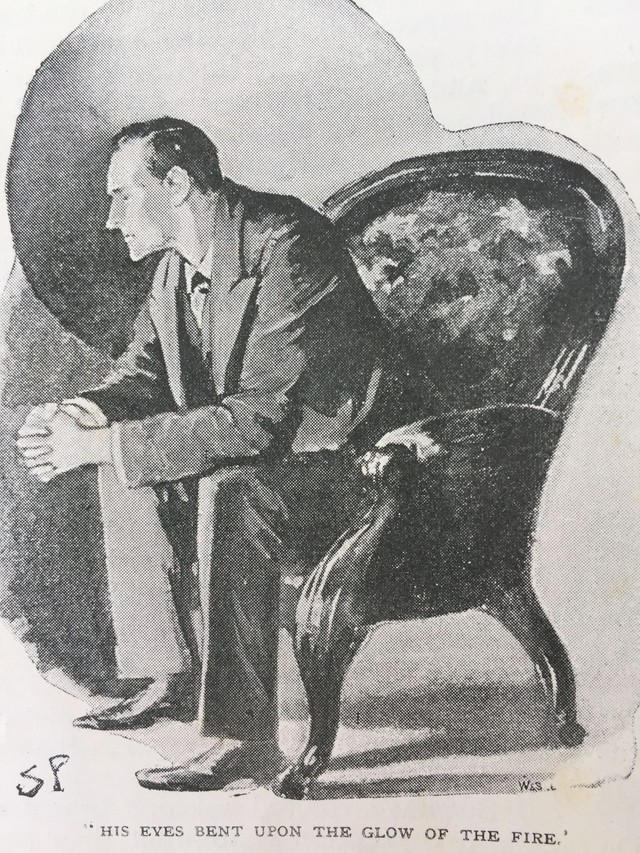
“Have you never — ” said Sherlock Holmes, bending forward and sinking his voice — “have you never heard of the Ku Klux Klan?”
“I never have.” [Replied Doctor Watson]
Holmes turned over the leaves of the book upon his knee. “Here it is,” said he presently:
“Ku Klux Klan. A name derived from the fanciful resemblance to the sound produced by cocking a rifle. This terrible secret society was formed by some ex-Confederate soldiers in the Southern states after the Civil War, and it rapidly formed local branches in different parts of the country, notably in Tennessee, Louisiana, the Carolinas, Georgia, and Florida. Its power was used for political purposes, principally for the terrorizing of the negro voters and the murdering and driving from the country of those who were opposed to its views.”
Would the MAGA hat crowd think that reading this story in a classroom is an example of teaching Critical Race Theory? A clever cartoon adaptation of “The Five Orange Pips” makes no mention of the KKK, but prejudice and social integration remain a theme.