
Dave Gold, founder of the legendary Gold Star Recording Studios in Los Angeles, has died.
Now is a good time to watch, or rewatch, the Wrecking Crew documentary.
Dave Gold, founder of the legendary Gold Star Recording Studios in Los Angeles, has died.
Now is a good time to watch, or rewatch, the Wrecking Crew documentary.
By the start of the 1940’s, Alfred Hitchcock had left England for America. The “official” (if that means anything) Alfred Hitchcock page on Facebook has this collection of posters for his Forties movies.
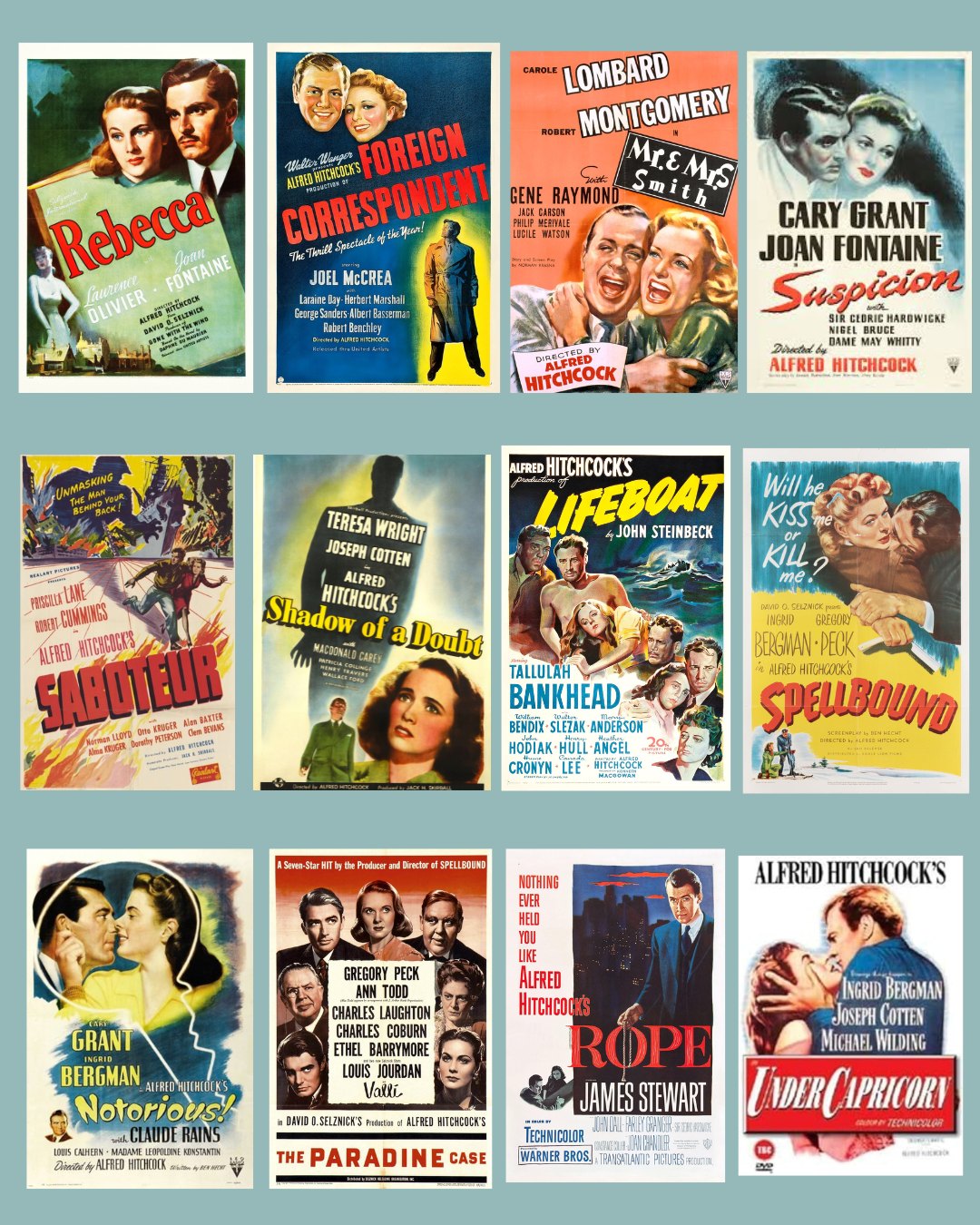
Hitchcock’s peak was during the Fifties, especially when he had an unbroken string of masterpieces from Dial M for Murder in 1954, through Psycho in 1960. At that same time he also produced his excellent anthology TV series, Alfred Hitchcock Presents.
My personal favorite Hitchcock film is Vertigo, from 1958. The premise of the story is preposterous, but nothing is beyond belief when a man is obsessed with a woman.
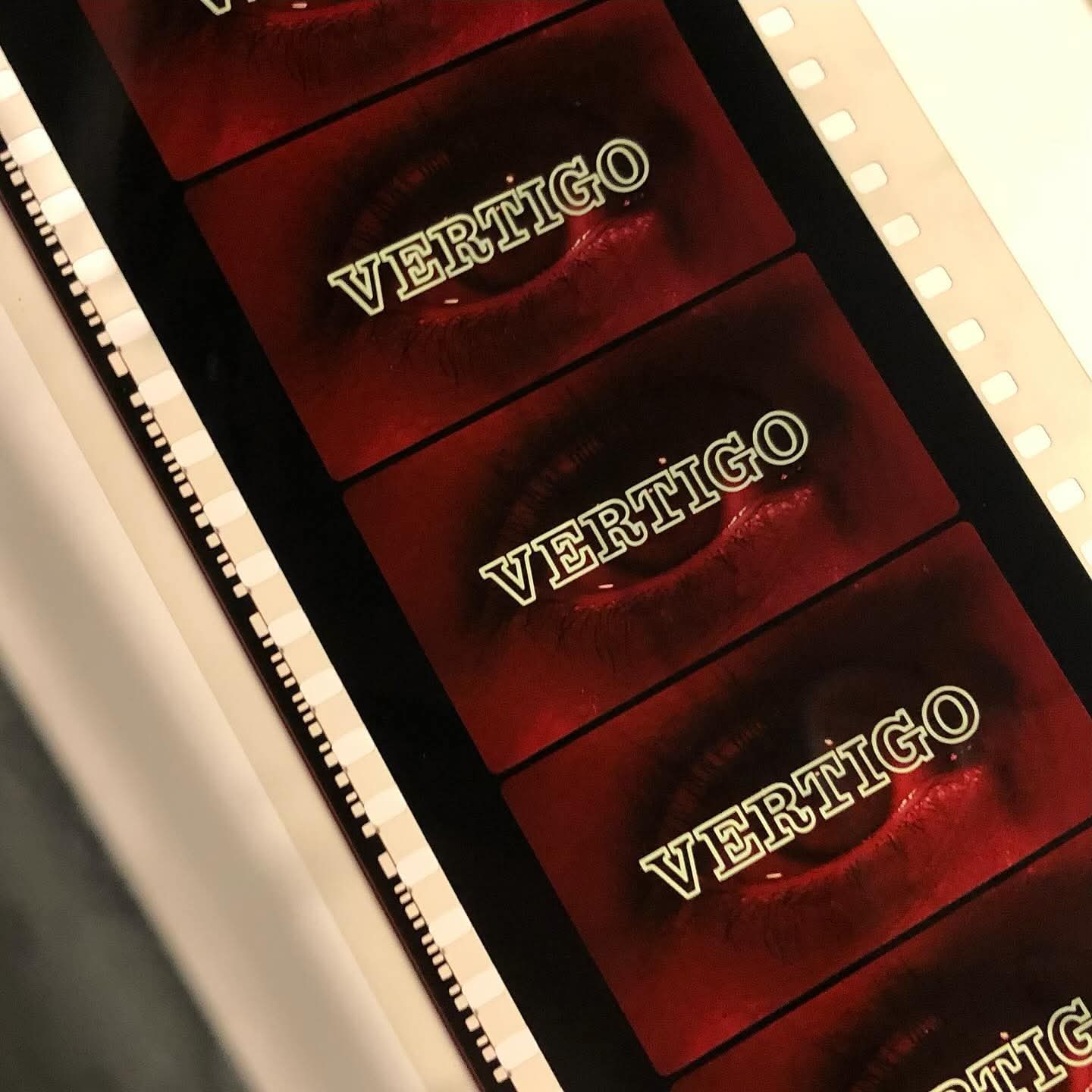
The first time I saw Vertigo was in the 80s, when Hitch’s “lost” (long-withheld) Paramount movies were put back into release for the first time in twenty years. Denro and I attended a very memorable showing at the Brattle Theater in Cambridge, MA.
I have Vertigo in this Hitchcock Blu-ray/4K HD combo package.
https://www.amazon.com/dp/B08CPLM17C
My JVC DLA-HD750 projector is now an old model, but as Bismo can attest the picture quality continues to be outstanding. Although 4K content is scaled down to 2K for the projector, there are other differences that are readily apparent in remastering, besides image resolution and High Dynamic Range.
Recently, I complained about the terrible image quality of Alien on Amazon Prime. I purchased it with high expectations, as I very much prefer the presentation of Vertigo on Amazon Prime over both the Blu-ray and 4K HD copies.
Is Amazon Web Services developing its own, presumably proprietary, high-density fiber optic cable packages? I have my doubts, but that’s what is said in this Marketplace report.
It seems more likely that AWS is doing what Meta is doing, and working with Corning’s new fiber optic products.
Maybe this has a fuller explanation of what AWS is doing. (Full disclosure: I pay AWS $0.15/month to store some files.)
Neil Pappalardo has died. Sixty years ago, with Curt Marble and others, Neil created MUMPS*. To this day, MUMPS software technology, or one of its derivatives, drives the majority of hospital information systems.
I was fortunate to have started working for the great man when the company was small enough that Neil knew every employee. He was incredibly supportive of me through two extremely difficult crises; one medical (detached retina), and one financial (the mortgage underwriting fiasco).
The last time I met with Neil personally, I was both flattered and stunned when he told me, “I know what you’ve been working on. Keep it up. You have a job here for as long as you want one.”
This video will start with Neil talking about a class he took at MIT. The instructor was Amar Bose.
* Massachusetts General Hospital Utility Multi-Programming System