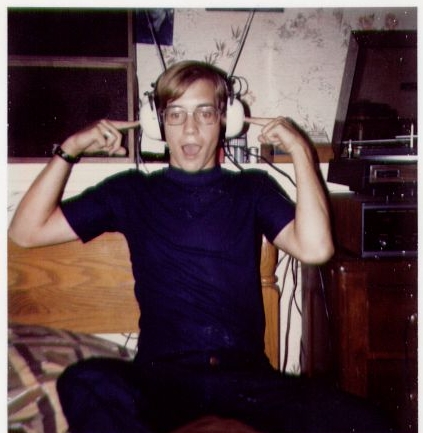
This post comes with sensitivity to the hearing impaired.
 I have big ears. In my younger years I could hear TV CRT flyback transformers, operating at just under 16 kHz, like a dog whistle. On some TV sets the high frequency sound was really loud. “You don’t hear that?” I’d ask. No, they didn’t. Forty years ago I was at Q Audio on Vassar Street in Cambridge, MA. Looking to buy my first CD player, I was listening to one from Sony. The speakers were an esoteric model, the Spica TC-50. It was known for having a distinctively detailed sound. As a recording faded out, I asked the sales guy, “What’s that grainy sound, moving from the right to the left channel?” He replied, “What sound?” As was eventually revealed in the audio magazines, the grainy sound was low-level linearity distortion in early digital-to-analog converters.
The point being, for most of my life I’ve enjoyed having wicked good hearing. As I mentioned a while ago, at the end of 2024 I began having an issue with my left ear. It became bad enough that I was feeling down about it. More so than I realized, now that I’m doing very much better.
The links section of this site has the headphone and hearing test I use to make self-checks reliable and repeatable:
https://onlinesound.net/tone-generator
Over the past year, the hearing level in my left ear has been weaker overall, compared to my right ear. Bass perception was definitely not good, and there was also a significant drop in the 6-8 kHz range. The tone shifted over to the right when sweeping through those frequencies. There was also a persistent whistling sound in my left ear. Tinnitus.
When listening to music, mono recordings and stereo recordings with sounds that should be dead center, were perceived as being a bit over to the right. This really annoyed me. Combined with a loss of high frequency hearing in both ears, I was so dismayed that I stopped listening to IEMs and headphones.
I tried ear wax drops, twice, without results, so I figured that wasn’t the problem. But at my annual “Medicare Wellness Visit,” my doctor said wax was the likely problem. He told me it was hard and packed, so the safe treatment was to stick with ear wax removal drops. After multiple treatments they finally worked. The gunk that came out of my ears was gross, but the sounds going in my ears are fantastic! Loud sounds can make my ears ring, but aggressive sinus irrigation helped reduce the tinnitus so much I don’t have to think about it.
The first thing after clearing my ears was to put on a pair of IEMs and run the tone generator. The left and right channels were the same volume! Bass in the left was as nice and solid as on the right, with no more drop-off between 6-8 kHz! Even more amazing was the improvement in my high frequency hearing. Solid to 13.5 kHz, and even a bit higher if I turned up the volume. Music sparkled again! I cried. Excellent results for a man my age. What a mood lifter this is!
So now I want to recommended two things. First, have a doctor look in your ears. If there’s a wax problem, get it taken care of.
Second, get this IEM. With the caveat that a good fit is everything with an in-ear monitor, the state-of-the-art sound of the Truthear Gate is truly remarkable. The fact it’s currently available for only $17.50 is even more remarkable.
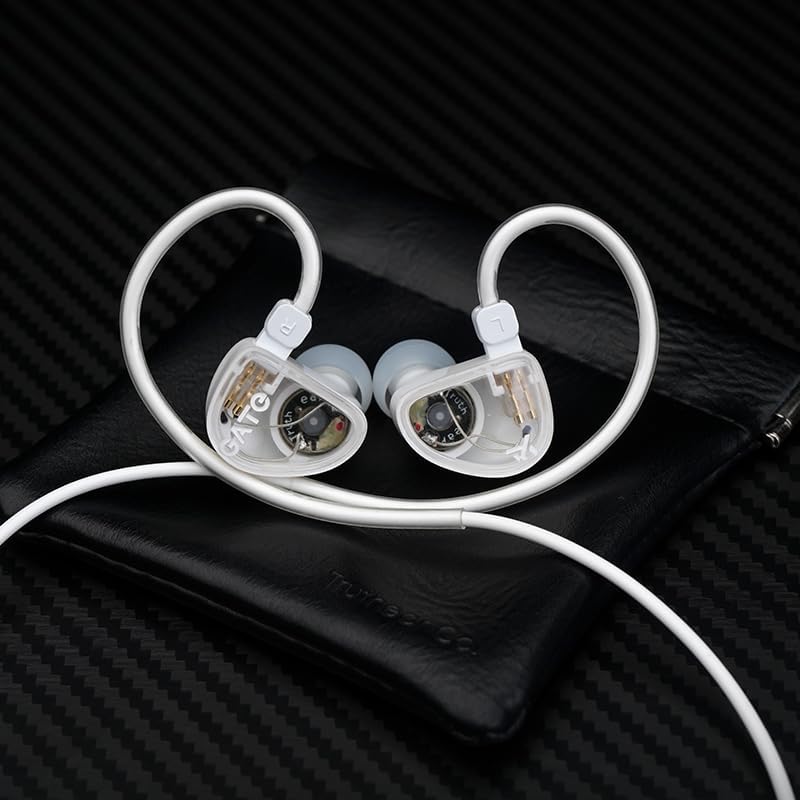
https://www.amazon.com/TRUTHEAR-GATE-Dynamic-Headphone-Interchangeable/dp/B0D5R334SH/
This is Amir’s review over at Audio Science Review.
https://www.audiosciencereview.com/forum/index.php?threads/truthear-gate-17-iem-review.61784/
If an IEM sounds awful, it is a must to check for tight seal. I have run into this countless times, finding an IEM that measures well to sound terrible. I then mess with the IEM, moving it around, pushing it in and out, etc. If there is any change then there is a problem and usually I can solve that with a larger tip. It is so easy to jump to conclusion about the fidelity as no other transducer has this issue (most headphones or speakers).
Above even explains brightness as without bass, that is what you experience. … If you get things right, IEMs can do things that even the best headphones sometimes can’t.
– Amir, Founder of Audio Science Review