This stat of an un-inked comic book panel is from a 5-page Inhumans backup story, in a 1967 issue of Thor that I remember very well.
Note Jack Kirby’s description for Stan Lee to expand upon when writing the dialogue
It’s an example of why I consider Jack Kirby to be the all-time greatest comic book artist. Original art dimensions would soon downsize to 10″x15″, but this panel was drawn 12″ wide, giving Kirby extra space to convey a sense of depth and solidity in the objects and surfaces.
Joe Sinnott applied his impeccably clean and precise inking to the story. Unfortunately, the coloring is much too bright and flat in this clipping from a digital comic.
STOLEN!Fantastic Four #84 pgs. 4,5 – Jack Kirby (pencil), Joe Sinnott (ink)
“As I’ve mentioned, I was recently the victim of a robbery — and what really hurts is that I know who did it and it was someone I trusted a lot and not for a short time.”
— Mark Evanier
A robbery implies the theft occurred while Mark was present. I’m thinking it’s probably more likely that he is the victim of a burglary, committed while he was away at WonderCon.
A New York City street renamed in honor of Jack Kirby?
Joe Sinnott said Stan Lee struggled with the introduction of Black Panther in Fantastic Four #52. Was it because of the potential controversy resulting from having a black leading character in Marvel Comics? Nope, it was simply that Stan kept changing his mind about the character’s costume. Full face mask like Spider-Man, or a half-mask like Captain America? Short cape or no cape?
There is little to go on, regarding the influence that Jack’s stint at the Fleischer animation studio in New York had on his later work. But I can infer something from the fact that, besides Kirby, Carl Barks, Walt Kelly and Hank Ketcham all had animation studio experience.
It started with me sending Denro this picture of an album I saw on display at Newbury Comics. The late and very great Joe Sinnott, Bing’s #1 fan, would have been pleased to see a new Crosby record in 2025.
The topic quickly switched to something else from long ago, when Denro replied that he had just purchased a new record he spotted at a Barnes & Noble.
It’s a soundtrack of It’s a Wonderful Life that I heretofore didn’t know existed. Denro said the album was originally released as a CD that is no longer available.
The CD information at that link includes this warning…
Do not be fooled by any other CDs that purport to be the original soundtrack for this film – they are all bootlegs and contain dialogue, sound effects and music right off the film itself. This is the first release of the real deal.
… a warning that is easily confirmed.
The album Denro bought is also available as a new CD release.
The soundtrack is on Amazon as an MP3 for $9, so I bought that. I would have sprung for a CD copy, but the liner notes are available on the Kritzerland page.
This music cue is called “Love Sequence”. It reminds me of the music that Tiomkin composed for Capra’s Lost Horizon, produced ten years before It’s a Wonderful Life.
My favorite aspect of It’s a Wonderful Life is the contrast that’s drawn between Mary and Violet, who I see as the most interesting character in the movie. It’s easy to infer what Violet originally had in mind for her evening’s fun, before her attempt at seducing George, and it’s certainly intended for mature audiences. “We’ll wait for you, baby.”
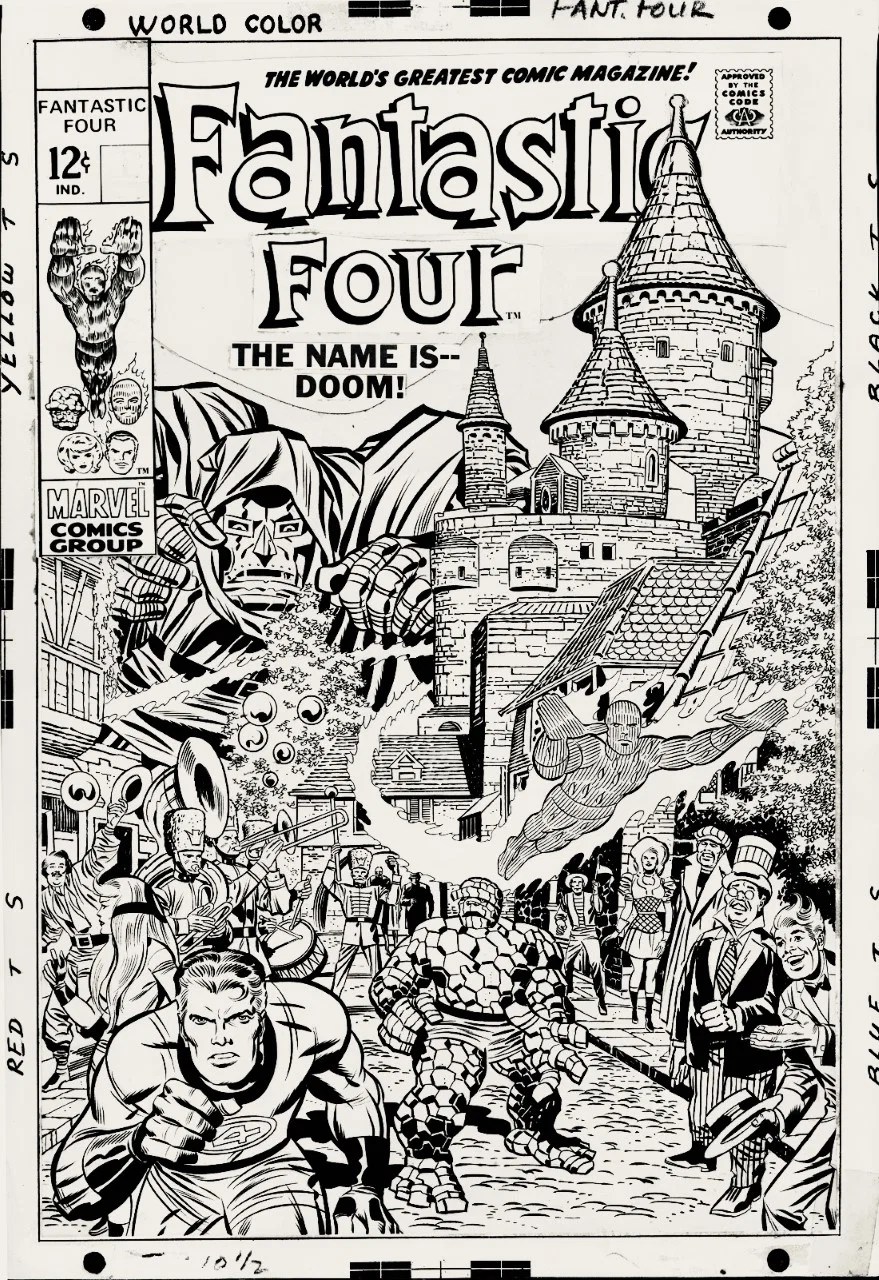
Most “hour” network TV shows are now about 40 minutes long. So is this survey of Fantastic Four comic book covers from the legendary Lee-Kirby run on the title. More than half of the issues were inked by my dearly departed pal, Joe Sinnott, who returned to the series in issue #44, after inking Jack’s art for the introduction of Doctor Doom in issue #5.